
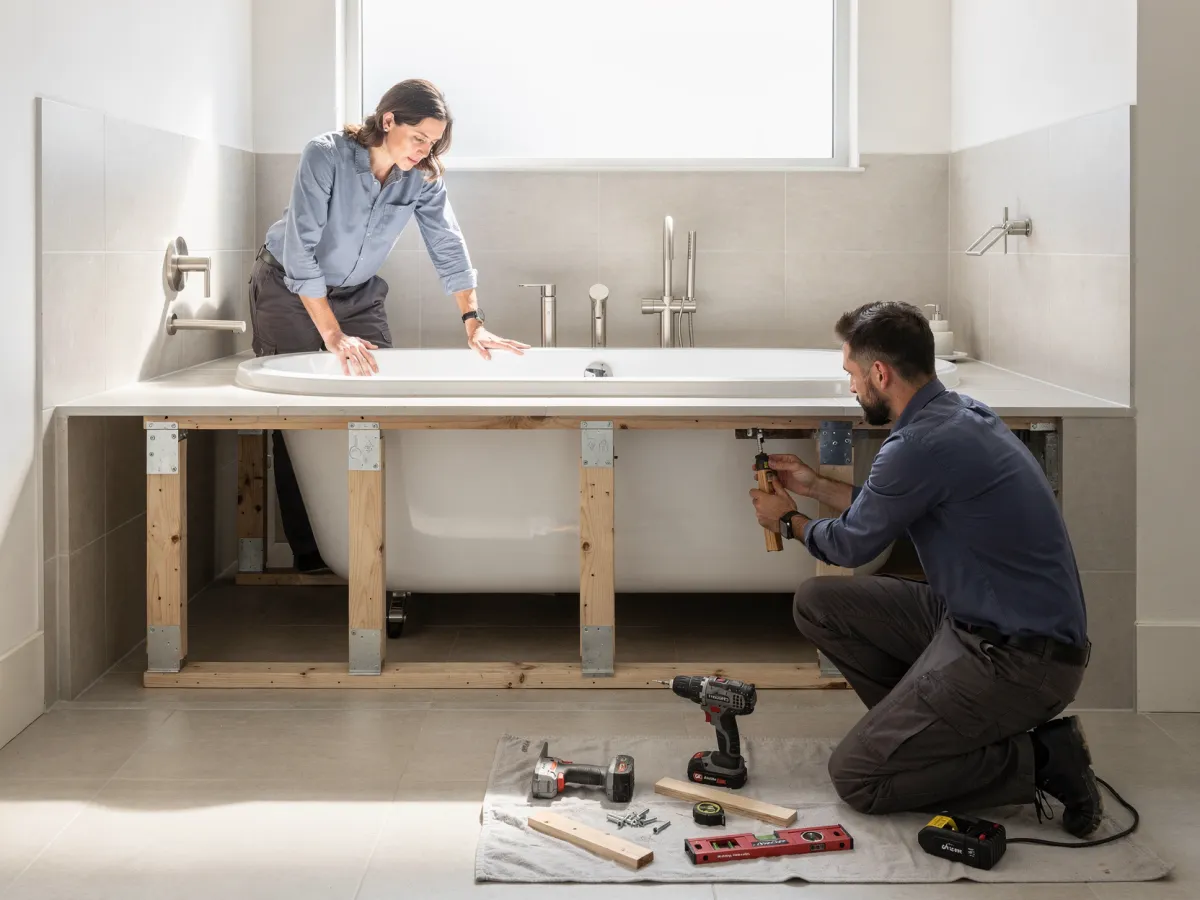
If Your Tub Feels Soft... That's a Problem
Most people don’t think twice about how their bathtub feels underfoot. If it still holds water and looks fine on the surface, it’s easy to assume everything is okay.
But if your tub flexes, feels soft, or has a slight bounce when you step in, that’s not normal. And it’s not just a cosmetic issue. It’s often the beginning of a much larger structural problem.
Here’s what’s actually happening underneath your tub, why it matters, and why addressing it early can save you from a much bigger repair later.
What a Soft Tub Actually Means
A bathtub should feel solid and stable. If it flexes under your weight, it usually means the support underneath the tub has failed or weakened over time.
This is a structural issue, not a surface-level problem.
The tricky part is that the tub can still look perfectly fine from above. You may not see visible cracks, stains, or discoloration. But underneath, the structure supporting the tub is no longer doing its job properly.
Think of it like a floor that feels bouncy when you walk across it. The surface may appear normal, but something underneath has started to break down.
Over time, that movement puts stress on the tub itself and the materials surrounding it.
What Happens When You Ignore It
A soft tub rarely stays “just a little soft.”
The flexing gradually gets worse, and eventually the repeated movement can lead to cracks in the tub surface. Once cracks form, water starts finding its way into places it should never reach.
That’s when the real damage begins.
Leaks can slowly work into the subfloor beneath the bathroom, causing hidden moisture damage that often goes unnoticed for months. In some cases, it can even affect nearby walls, flooring, or plumbing connections.
And by the time the damage becomes visible, the repair may no longer be limited to the bathtub itself.
What could have been a relatively simple repair can quickly turn into a much larger renovation project.
The Hidden Cost of Waiting
One reason homeowners delay dealing with a soft tub is because the bathtub still “works.”
You can still shower. You can still fill the tub. Nothing seems urgent on the surface.
But most of the damage caused by a failing tub support system happens out of sight.
Underneath the tub, the constant movement continues to weaken the structure. Moisture may already be reaching areas you can’t see, slowly damaging the surrounding materials over time.
Waiting too long often means:
More extensive structural repairs
Subfloor replacement
Plumbing repairs
Mold or moisture remediation
Higher overall renovation costs
The earlier the problem is addressed, the simpler and more affordable the repair usually is.
The Smart Move: Fix It Early
If your tub has any noticeable flex or softness, the best step is to have it inspected before the problem escalates.
In many cases, the tub can be reinforced and structurally restored without needing a full bathroom remodel. Stabilizing the support underneath the tub early helps prevent further damage and extends the life of the bathroom as a whole.
A proper repair restores the tub to a solid, reliable surface and helps eliminate the risk of bigger surprises later on.
Don’t Wait Until It Becomes a Bigger Repair
If your bathtub feels soft, flexes when you step in, or just doesn’t feel stable anymore, don’t ignore it.
What starts as a structural support issue can eventually turn into cracks, leaks, and major hidden damage if left untreated.
The good news is that catching it early keeps the repair much simpler and more manageable.
Reach out to us for an honest assessment of what’s going on with your tub. We’ll walk you through your options and help you address the issue before it turns into a much bigger project.
